

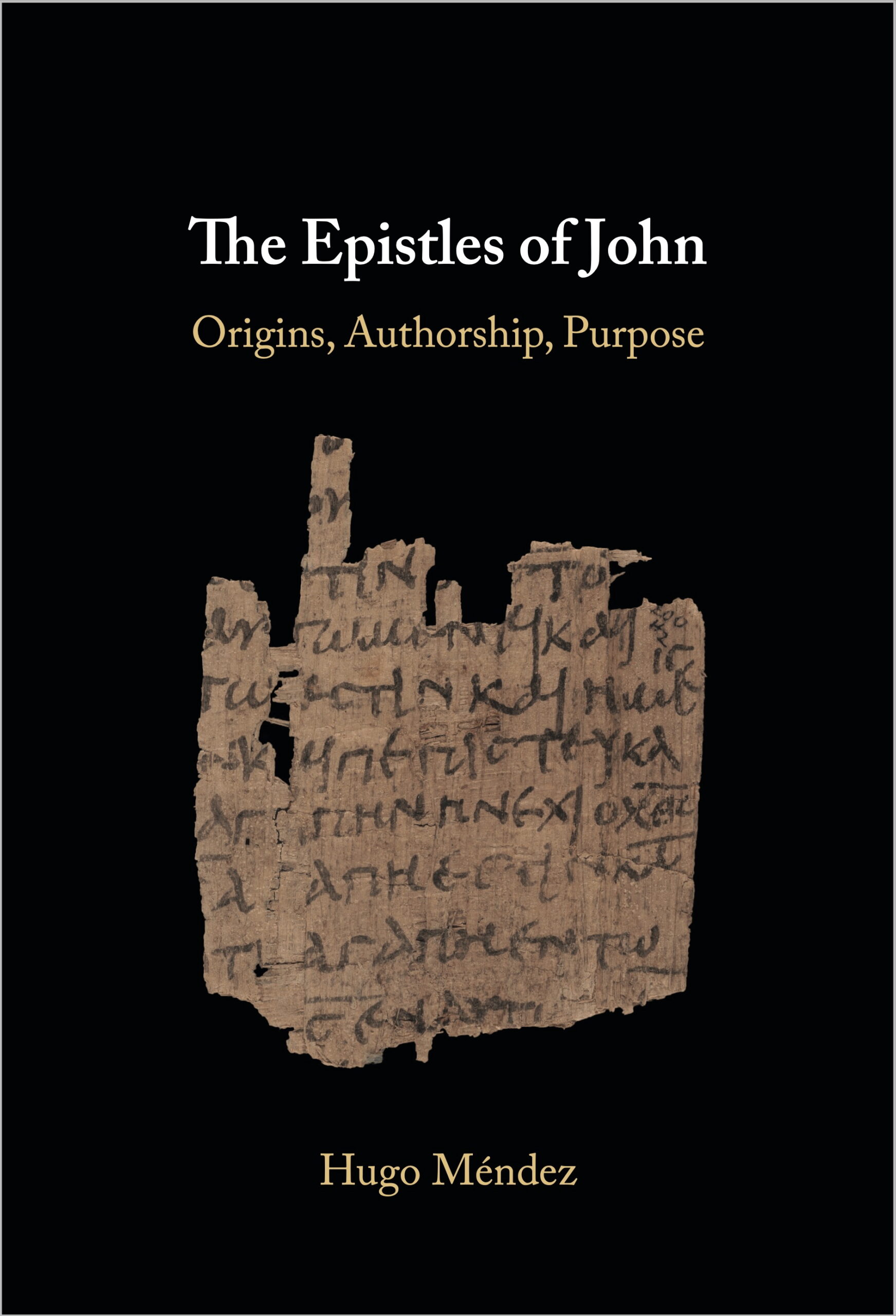

This work by Hugo Mendez is licensed under a Creative Commons Attribution-NonCommercial 4.0 International
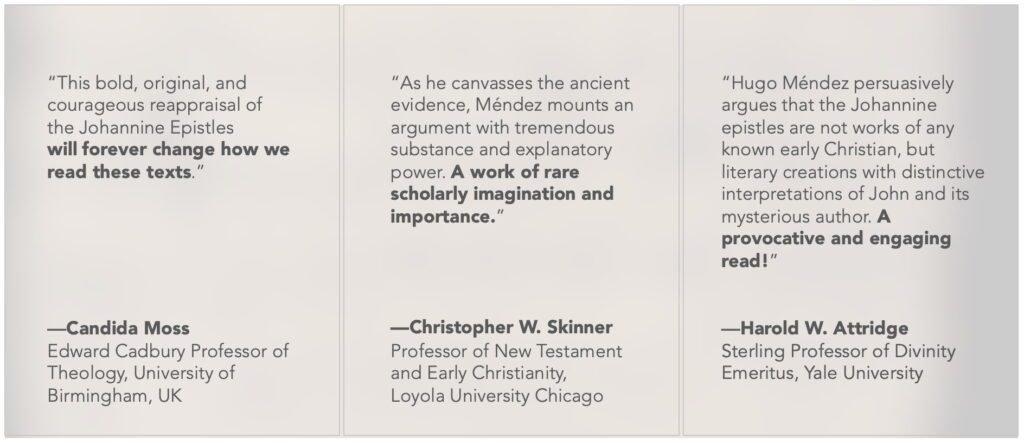
Advance Praise
Summary
For centuries, Christians believed that the biblical letters of 1, 2, and 3 John were penned by a disciple of Jesus. Today, scholars speculate that the three are artifacts of a lost “Johannine Community.” In this groundbreaking study, however, Hugo Méndez challenges both paradigms, meticulously laying out the evidence that the Epistles are instead a series of falsely authored works. The texts position themselves as works by a single author. In reality, they were penned by three different writers in a chain of imitation, creative adaptation, and invention. Through incisive, close readings of the Epistles, Méndez clarifies their meaning and purpose, demystifying their most challenging sections. And by placing these works in dialogue with Greco-Roman pseudo-historical writing, he uncovers surprising links between Classical and early Christian literature. Bold, comprehensive, and deeply original, this book dismantles older scholarly views while proposing new and exciting approaches to these enigmatic texts.
Book Highlights